

Montessori Binomial Cube: A Concrete Path to Algebra
A puzzle today can become an algebraic idea years later.
The Montessori Binomial Cube is a carefully designed material that helps children explore color, dimension, pattern, and spatial relationships. At first, it is presented as a sensorial activity—not as a formal mathematics lesson.
Children remove the eight component blocks from the box, examine their different dimensions and colors, and discover how the individual pieces fit together to form one complete cube. Through repeated hands-on exploration, they gradually become familiar with a pattern that can later be connected to algebra.
This progression reflects a central Montessori principle: experience first, followed by language and abstraction.
What Is the Montessori Binomial Cube?
The Montessori Binomial Cube consists of eight wooden blocks stored inside a hinged box. The blocks vary in size and are color-coded to represent the components of a binomial expression.
When assembled correctly, the pieces form a cube. The colors and dimensions guide the child while still leaving room for observation, comparison, problem-solving, and independent discovery.
Although the material has a direct mathematical relationship, young children initially work with it as a sensorial puzzle. They do not need to understand the algebraic formula to benefit from the activity.
How Children Work with the Binomial Cube
The child begins by carefully removing the blocks and placing them in an orderly arrangement. Each piece is observed and compared before the cube is reconstructed layer by layer.
The activity invites the child to notice:
Differences in height, width, and depth
Relationships between colors and dimensions
The position and orientation of each block
The sequence required to rebuild the cube
How separate components form an organized whole
The control of error is largely built into the material. If a block is placed incorrectly, the cube may not fit properly inside the box. This allows the child to recognize and correct mistakes with less adult intervention.
Skills Developed Through the Binomial Cube
Working with the Montessori Binomial Cube supports several areas of development.
Visual discrimination
Children compare the colors, shapes, and dimensions of the eight blocks. This strengthens their ability to recognize similarities, differences, and repeating patterns.
Spatial reasoning
Reconstructing the cube requires children to consider how three-dimensional objects relate to one another in space. They explore position, direction, orientation, and proportion through direct experience.
Concentration
Completing the puzzle requires attention and persistence. Repetition allows the child to work for increasingly longer periods while refining accuracy and coordination.
Orderly thinking
The cube is usually assembled in a logical sequence. Children learn to organize their work, follow a pattern, and understand how individual parts contribute to a complete structure.
Problem-solving
When the pieces do not fit correctly, children can examine their work, reconsider the arrangement, and try another solution. This encourages independent thinking and self-correction.
The Mathematical Meaning of the Binomial Cube
Years after the child’s first sensorial experience, the same material can be used to illustrate the concrete structure of the binomial formula:
(a + b)³ = a³ + 3a²b + 3ab² + b³
The eight blocks physically represent the terms found when (a + b) is cubed:
One cube represents a³
Three rectangular prisms represent a²b
Three rectangular prisms represent ab²
One smaller cube represents b³
Together, these eight components form a cube with side length a + b.
The algebraic symbols may be introduced much later, but the underlying pattern is no longer entirely unfamiliar. The child has already seen it, touched it, constructed it, and repeated it through purposeful activity.
From Concrete Experience to Abstract Understanding
Montessori education often introduces a concept through a progression from the concrete to the abstract.
With the Binomial Cube, the child first encounters a physical object. The material provides visible colors, measurable dimensions, and movable pieces. Over time, language and mathematical symbols can be connected to this earlier experience.
The progression can be understood as:
Hands-on exploration → Recognition of patterns → Mathematical language → Abstract formula
This does not mean that every young child should receive an algebra lesson while working with the cube. Its early purpose is sensorial. The mathematical explanation becomes meaningful when the child is developmentally ready for abstraction.
Why the Binomial Cube Remains a Montessori Classic
The Montessori Binomial Cube demonstrates how one thoughtfully designed material can support learning at different stages of development.
For a younger child, it is an inviting three-dimensional puzzle that builds concentration, coordination, order, and visual awareness. For an older learner, it can become a concrete representation of an algebraic relationship.
One cube. Eight pieces. A mathematical pattern that grows with the child.
At Adena Montessori, we create Montessori materials designed to support hands-on discovery, independent learning, and the child’s gradual journey from concrete experience to abstract understanding.
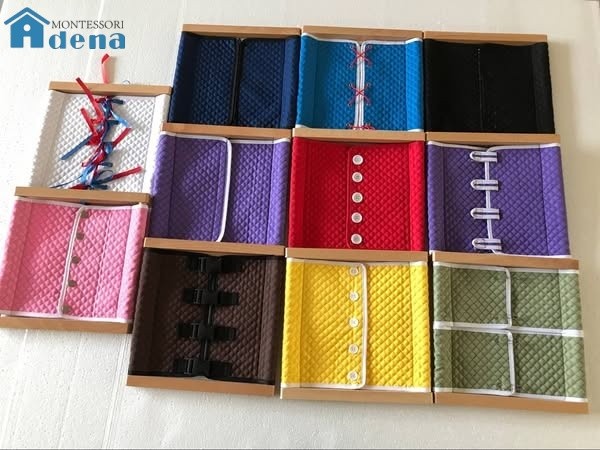 Montessori Dressing Frames for Child Independence
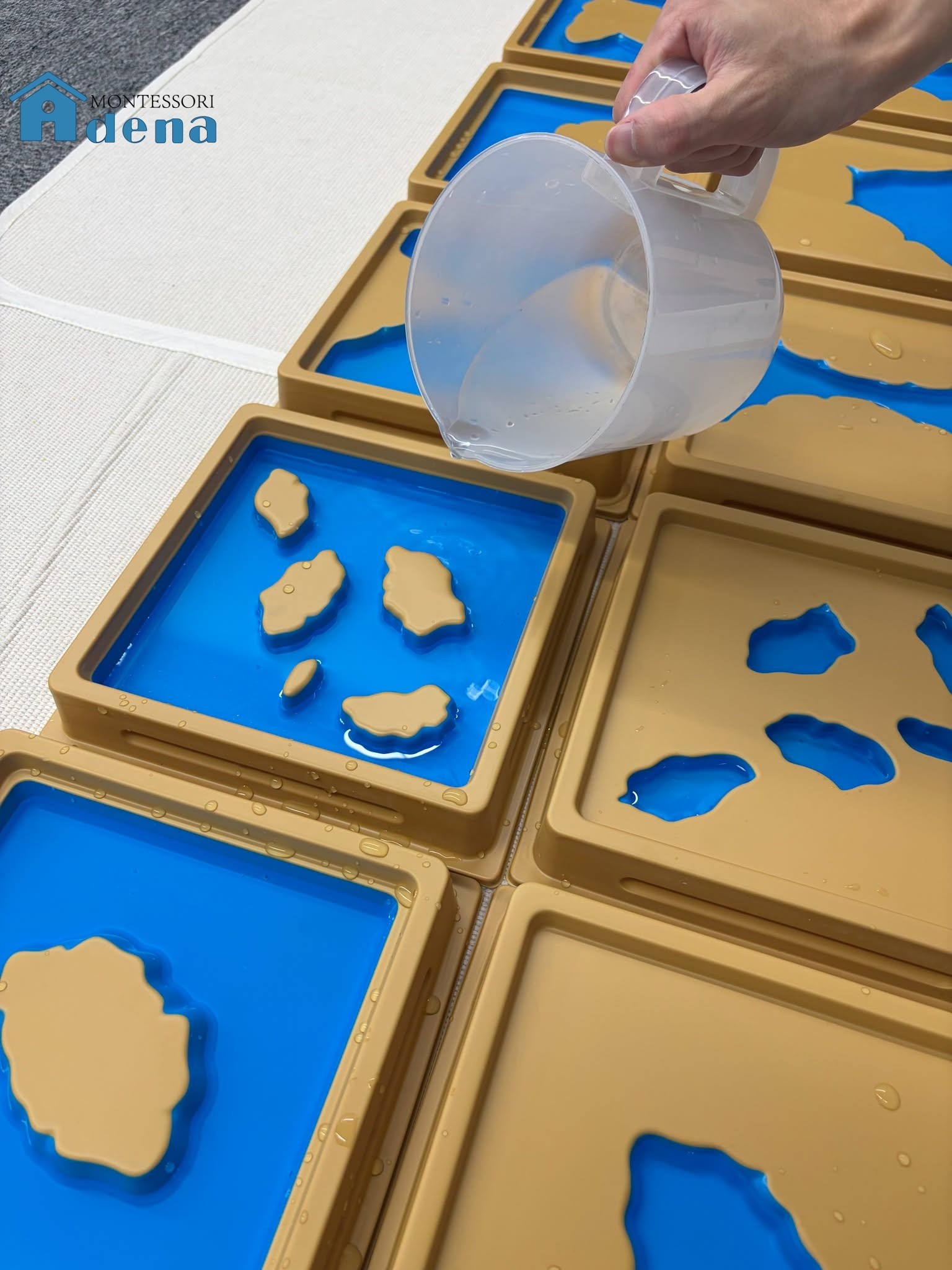 Montessori Land and Water Globe: A Child’s First Geography Lesson
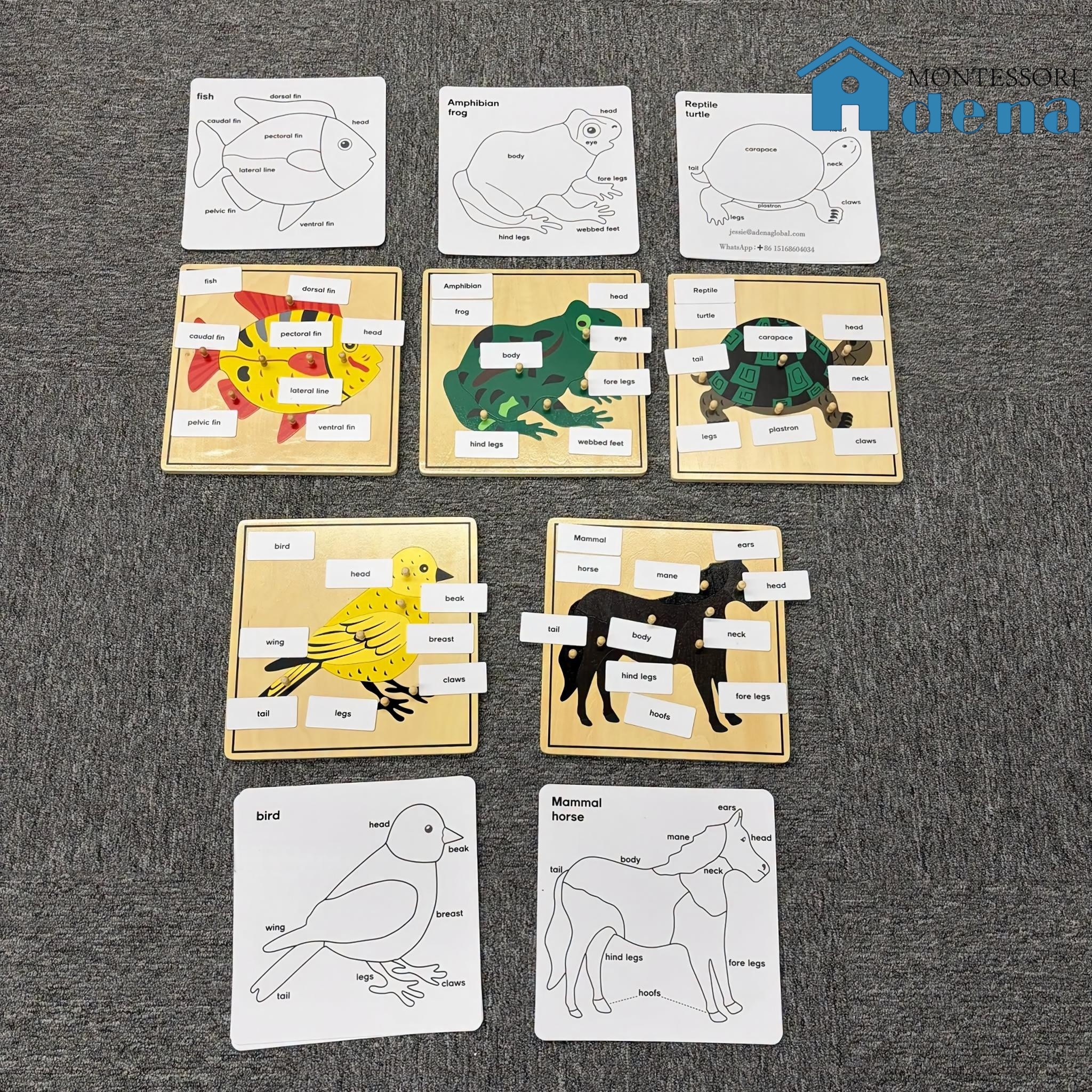 Montessori Biology Puzzles: Hands-On Learning Piece by Piece
 Montessori Sandpaper Letters: Preparing Children for Writing Through Touch and Sound