

How to Use Montessori Color Tablets for Autumn Shades Matchi?
Hello lovely educators and parents! Autumn is a feast of colour: the deep russets, burnt oranges, golden yellows, rich browns, olive greens. This presents a perfect opportunity to engage children in sensorial and visual discrimination work using the classic Montessori colour tablets — and our brand Adena Montessori offers beautifully natural-wood framed sets for this. As Dr. Maria Montessori taught us, “The child who concentrates is immensely happy.”
In this article I’ll walk you step-by-step through how to set up an autumn-shade matching activity using Montessori colour tablets, appropriate for the 2-6 yrs age range in American homes or Montessori classrooms.
Why use colour tablets in autumn?
1. They develop the child’s visual discrimination, naming of colour, gradation understanding — important sensorial work.
2. They link to the real environment: children outside see autumn leaves and can match what they collect with the tablets — making learning concrete and meaningful, not abstract.
3. They promote concentration, self-correction (if you include matching cards or self-check tray), and independence — which align with Montessori principles of prepared environment and child-led work.
Setting up the activity
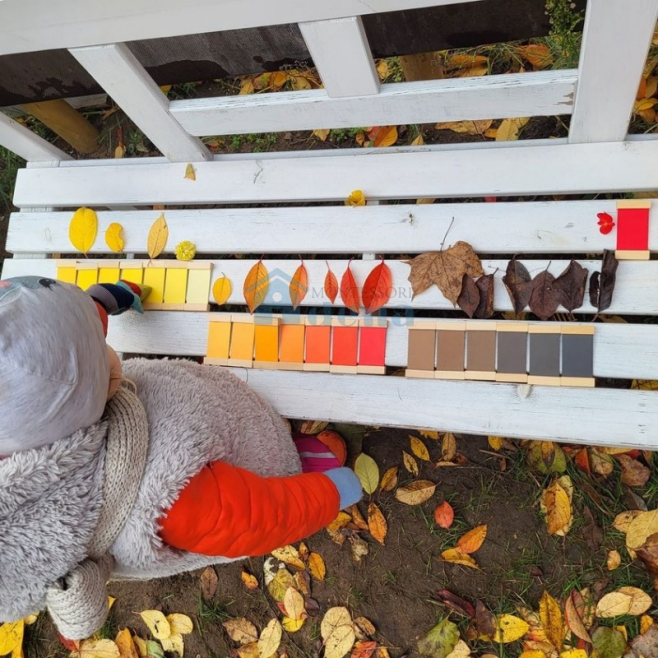
1. Prepare the materials: Select a subset of colour tablets from your Adena Montessori set that correspond to autumn shades (deep orange, mustard yellow, olive green, brown, burgundy). Lay them on a low tray accessible to the child.
2. Introduce the work: Invite the child to pick a colour tablet, then go outside (or bring inside) a natural item (leaf, acorn, pinecone) and see if it “matches” the tablet. This boosts connection between indoor sensorial work and outdoor real-world observation.
3. Sorting & naming: Once the child has matched items, invite them to sort the tablets into “my autumn palette” vs others, or grade from lightest to darkest within the autumn range. Encourage them to name the shades (“burnt orange”, “rust”, “mustard”).
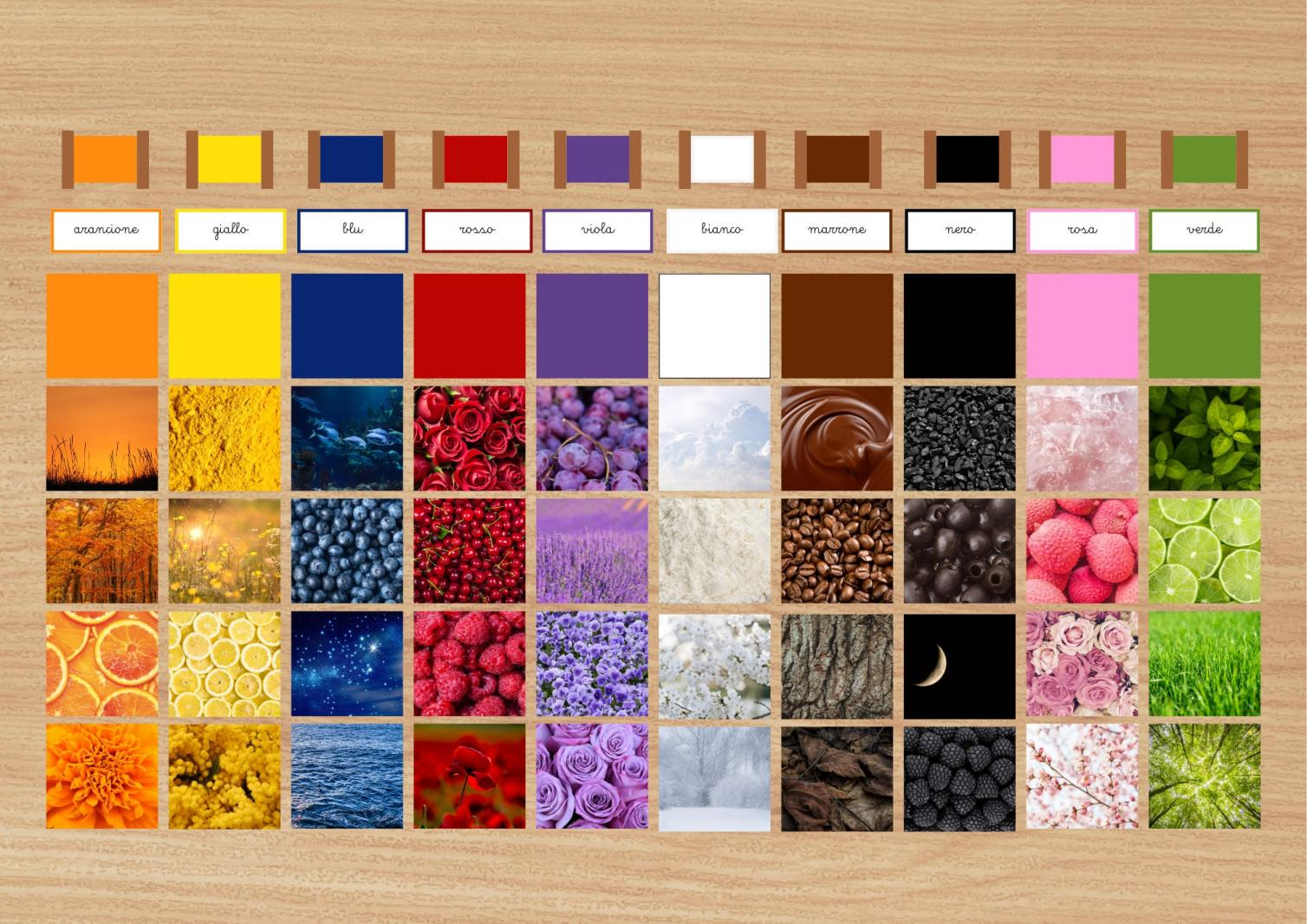
4. Extension work: Provide a self-correcting set of cards: each card has a natural item photo and the corresponding tablet shade. The child can attempt to match and then self-check by flipping the card to see if they were correct. This builds autonomy.
5. Creative expression: After matching, you might provide paper, crayons or water-colour paints in the same palette and invite the child to create an autumn-leaf drawing using only those shades. This links sensorial work to creative expression.
6. Reflection: Sit with the child and ask: “Which shade surprised you? Which one matched most leaves outside?” Encourage their verbalisation and thinking. This aligns with Montessori’s aim of concentration and reflection.
Tips for home and classroom
l Keep only a few tablets (3-5) at first, so the child doesn’t feel overwhelmed. Gradually increase complexity (8-10 shades).
l Place the trays on a low shelf so the child can access freely and return independently — supporting freedom within limits, hallmark of Montessori.
l Encourage the child to tidy up and return the tablets properly after work — reinforces practical life, order, and respect for the materials.
l Use natural lighting when possible to help accurate colour discrimination. Avoid mixing with bright artificial lighting that may distort perception.
l Make the outdoor-indoor connection explicit: “We collected that leaf outside, now we bring it inside to match.” Keeping the link strengthens learning.
FAQ
Q1: My child keeps calling every shade “orange” — is that a problem?
A: Not at all. At this stage, the child is refining visual discrimination. Celebrate the attempt: “That’s very good — you noticed many are orange-ish. Now let’s see if we can find differences like burnt orange vs rust.” Avoid corrective tone; keep it gentle and explorative.
Q2: How many shades should we include?
A: Start small — maybe 3-4 shades in the autumn palette. As the child becomes comfortable, you can expand to 6-8. The key is concentration and success, not rushing through many.
Q3: Can older children (5-6 yrs) use this too?
A: Yes — older children can grade shades more finely (light to dark), sort by hue families, create their own “autumn colour wheel”, or even graph how many leaves matched each shade. It becomes a stepping-stone into early mathematics and art.
Q4: Do I need to buy expensive sets?
A: Quality matters (stable colours, good material) but you don’t need luxury. Adena Montessori’s natural-wood framed sets are designed for durability and elegance in a prepared environment. But you could also create DIY tablets if needed — perhaps using paint chips and sealing them. The key is freedom, clarity of colour, and accessibility for the child.
 Back-to-School Anxiety: Montessori Tips for a Smooth Transition
 Back-to-School Checklist: Montessori Study Corner Setup | Adena Montessori
 How to Use Montessori Color Tablets for Autumn Shades Matchi?
 Grace & Courtesy Lessons Raising Polite and Empathetic Child